Devices:
- Endpoint: a device on a network that is not meant to transfer data between other devices. This includes users’ computers
- Switch: layer 2 device (we will talk about this with the OSI Model article) that connects local devices together
- Router: layer 3 device that connects to other switches, routers, servers, etc. (other intermediary devices)
- Server: a computing device designated to handle data and provide services to other devices on a network, known as clients
- Peripherals (Additional): additional devices that are connected to a network that the network can still function without. An example of this is a computer mouse
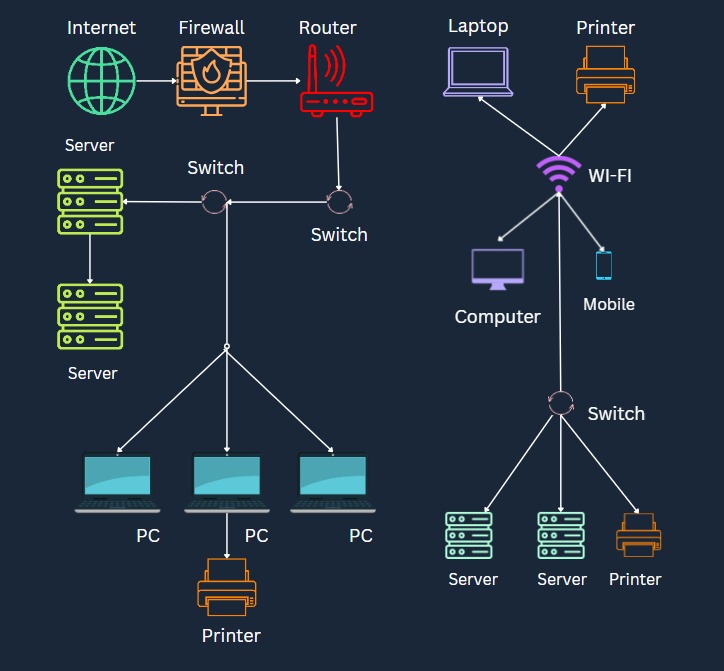
Wired vs. Wireless:
Networks are either wired or wireless, each have different benefits and drawbacks in security. Wired connections function because of the electrical signals exchanged between them. This type of connection is highly reliable and fast. However, it can be expensive to buy and manage so many cables. People using wireless connections don’t have to deal with confusing cables and don’t have to spend as much. Wireless connections are more prone to signal interference, making them a little less secure and slower.
States of Data:
Throughout the courses on this website, you have probably seen references to “data in storage” or “in transit.” Knowing the difference between these states is important because there are different security concepts that belong in different states. Here are the states of data:
- Data in Storage: also known as data at rest, any data that is not traveling or in use is stored somewhere
- Data in Transit: data traveling between different destinations (ex. An email)
- Data in Use: data that is being processed or presented
 Course 10 - Introduction
 Networking Quiz 1